The Aviation Digitalization and Intelligence Forum, Track 4 of the 2026 International Conference on Green Aviation (ICGA 2026), was held in Xi’an on November 3. Organized by the School of Aeronautical Science and Engineering at Beihang University and co-organized by the School of Aeronautics at Zhengzhou University of Aeronautics, the forum brought together experts and researchers from China, Brazil, Canada, Thailand, Türkiye, Pakistan, and other countries. Participants discussed advances in digital engineering and intelligent design, advanced air mobility and aircraft design, sustainable aircraft structures and materials, and unmanned aircraft systems and flow control.
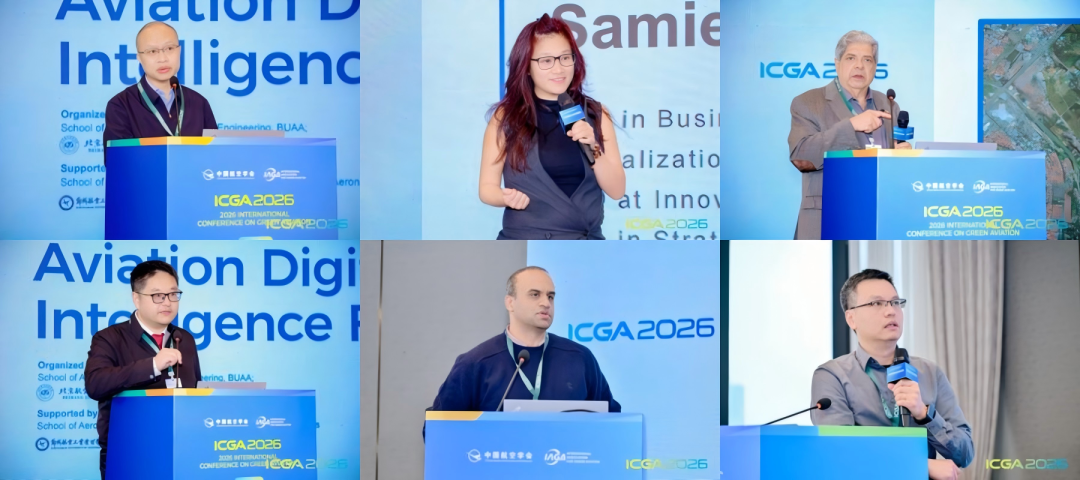
The presentations covered a wide range of topics, including immersive and collaborative approaches to aerospace education; physics-informed neural networks for UAV system identification; AI-enabled aerodynamic simulation for eVTOL aircraft; conceptual design and flight testing of advanced aircraft; the development of the advanced air mobility ecosystem; self-sensing and repairable composite materials; lightweight UAVs for swarm operations; flight strategies for long-endurance UAVs; aerodynamic and noise control; and digital-twin systems, autonomous operations, AI-based knowledge extraction, and fault tolerance in avionics.
Paper presentations also addressed digital-twin pilot-control systems, trajectory-based operations (TBO) simulation, knowledge extraction from large language models for functional architectures, and fault tolerance for intermittent failures in complex avionics systems.
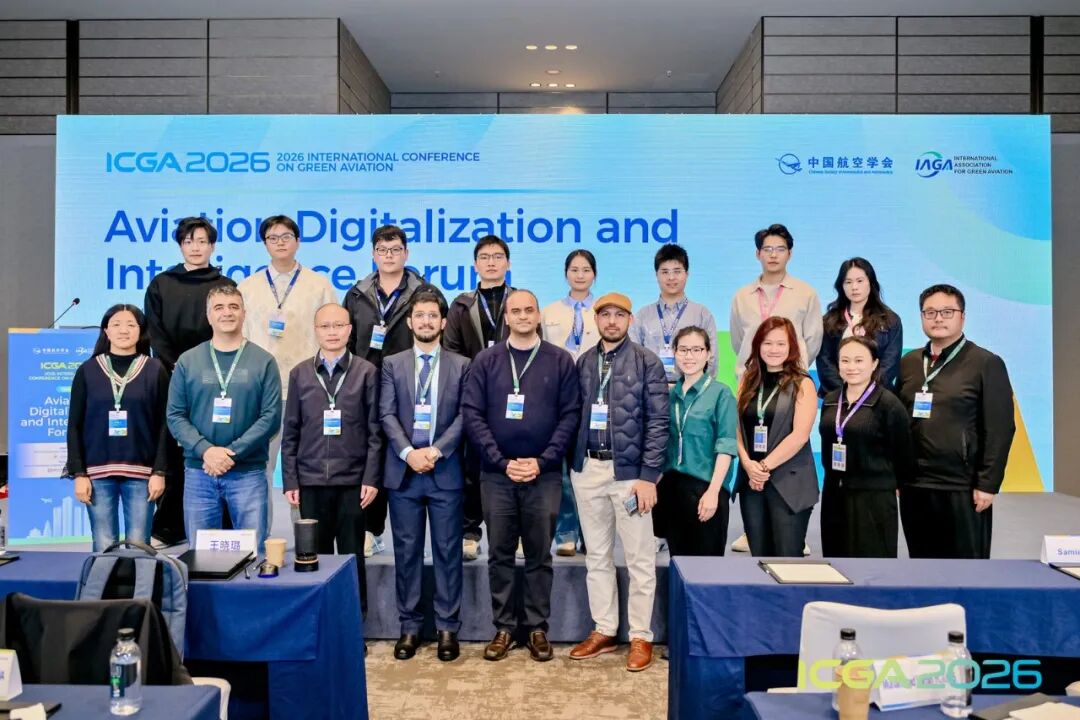
The forum brought together experts, researchers, and innovators to examine the transformative impact of digital and intelligent technologies on aviation. By fostering knowledge exchange and collaboration on AI-driven design, model-based systems development, digital twins, high-fidelity simulation, and next-generation aviation training, the forum aimed to accelerate the adoption of advanced digital technologies and support safer, more efficient, and more intelligent aviation.


 Back